
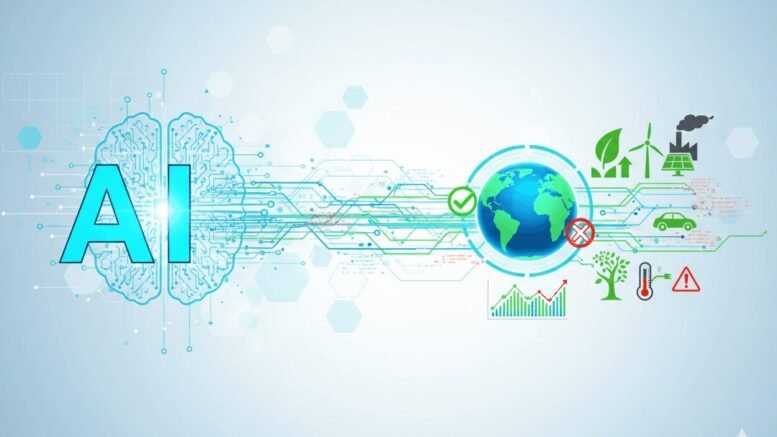
Lately, there has been a lot of talk about the potential use cases for—and benefits of—artificial intelligence (AI) for the pharmaceutical industry. Compared with other industries, such as literature and the arts, where AI is widely seen as the enemy and source of all things evil, three-quarters of life sciences companies reportedly consider AI as either ‘crucial’ or ‘very important’ to their business strategy (1).
For Pharma and healthcare, AI and machine learning (ML) come with a number of benefits—both theoretical and proven—from saving time by automating administrative tasks to aiding in detection and diagnosis, drug discovery, and optimisation of medical education (2). As a result, the vast majority of pharmaceutical companies expect AI to deliver better outcomes for patients in the near future (1).
Nevertheless, there are both perceived and real drawbacks to AI, including cybersecurity risks, compliance issues, and privacy breaches, as well as potential inaccuracies and bias (2,3).
Another important concern with AI is the heavy burden its use places on the environment. In this article, we’re exploring the good, the bad, and the ugly sides of AI from an environmental lens to determine whether its use can ever be part of a sustainable and healthy future.
Environmental Impact of Generative AI
It is no secret that generative AI is notoriously bad for the environment, including through increased electricity demand and water consumption of AI data centres, as well as increased mining and the accumulation of e-waste (4,5). Globally, AI-related infrastructure is estimated to consume nearly six times as much water as Denmark (6). This year, the electricity consumption of data centres is expected to approach 1,050 terawatt-hours, making them the fifth-largest electricity consumer in the world, right between Japan and Russia (4). While AI is not the only culprit, studies estimate that a ChatGPT query uses 5–10 times as much electricity as a basic Google search (4,6).
The Call for Sustainability in Pharma
For years now, there has been increased scrutiny on Pharma’s sustainability practices. With scope 3 emissions, which cover the entire value chain, accounting for approximately three quarters of Pharma’s greenhouse gas emissions, ensuring sustainable R&D, manufacturing, and sourcing practices needs to be a top priority for the sector (7).
For companies aiming to reduce their environmental impact, five key priorities have been suggested (8,9):
- Minimising water usage
- Addressing pollution risks associated with Active Pharmaceutical Ingredients
- Reducing greenhouse gas emissions across the value chain
- Improving supply chain transparency
- Cutting solid waste
With this and the above in mind, the use of AI seems to go directly against Pharma’s priorities to minimise water usage and reduce greenhouse gas emissions. This leaves the question: How can we justify the use of generative AI in the age of sustainability?
The Argument for AI in Pharma and Sustainability
On the flip side, there is hope that AI/ML might be able to address some of the many current environmental crises through its ability to assess environmental impact, detect patterns in data, predict future outcomes, and monitor emissions, deforestation, and waste disposal (6,7). ML is also expected to allow more companies to adopt a sustainability-by-design approach to manufacturing and day-to-day operations by bridging current data gaps (10).
Considering that the pharmaceutical industry contributes an estimated 4.4% of global carbon emissions (7), if there is an opportunity for AI to help reduce this number, will the pros outweigh the cons?
AI Beyond Manufacturing and Supply Chain Transparency
In the end, the choice to embrace AI in Pharma, despite its negative environmental impact, likely comes down to its widespread utility and benefits across all departments and throughout the product lifecycle.
From the R&D stage, AI has the potential to greatly reduce drug discovery timelines. Once an experimental drug has made it to the clinical trial phase, AI can be used to screen and identify eligible trial participants and reduce the time spent drafting time-intensive documents such as clinical study reports, making the process much more efficient. It can also be used to screen existing drugs to help repurpose them for other conditions, substantially reducing the time to market.
For commercial teams, under the supervision of an experienced medical writer and regulatory team, AI can be used to draft tailored medical content for healthcare providers (HCPs), patients, and caregivers, individualised to the specific condition, HCP prescribing habits, and/or preferred communication style.
AI also shows potential to improve MSL training (11), patient education, and continuing medical education processes and outcomes (12), thereby improving patient care. The latter can be achieved by creating personalised learning journeys and curricula to help learners gain a deeper, more nuanced understanding of the disease state and available therapies. In some cases, it involves leveraging AI-driven virtual patient cases and simulations to enable physicians to practice making differential diagnoses, selecting guideline-directed treatments, and engaging in shared decision-making or complex treatment planning.
What Matters to Pharma’s Customers?
While sustainability should absolutely be a key consideration in many parts of Pharma operations, when choosing between similar products (e.g., asthma inhalers), patients and HCPs both rate environmental impact lower than factors such as efficacy, ease of use, and safety (13). This indicates that any measures to improve these factors, including leveraging AI, are likely to be prioritised over efforts to make products more environmentally friendly.
In the end, although the potential use cases and theoretical advantages of AI and ML in Pharma are numerous, they need to be balanced with the downsides, and not only to the environment. Moving forward, the key to sustainable AI use lies in knowing how to use it responsibly and efficiently.
Yes, it is part of the problem, but it will most likely also play a part in the solution.
About the Author
Cecilia Petrus is the Medical Director at Impetus Digital, where she oversees the Medical Writing department and helps ensure that each HCP engagement and medical education deliverable meets the highest standards. Since 2020, she also leads the company’s sustainability efforts.
References
- https://www.whitecase.com/insight-our-thinking/new-frontiers-how-ai-is-transforming-the-life-sciences-industry/key-findings
- https://www.ncbi.nlm.nih.gov/books/NBK613808/
- https://hai.stanford.edu/ai-index/2025-ai-index-report/responsible-ai
- https://news.mit.edu/2025/explained-generative-ai-environmental-impact-0117
- https://www.csps-efpc.gc.ca/tools/articles/ai-environmental-effects-eng.aspx
- https://www.unep.org/news-and-stories/story/ai-has-environmental-problem-heres-what-world-can-do-about
- https://www.pharmtech.com/view/integrating-sustainability-into-the-core-of-pharmaceutical-science
- https://sustainabilitymag.com/articles/wbcsd-pharmaceutical-sector-faces-environmental-reckoning
- https://www.wbcsd.org/resources/roadmaps-to-nature-positive-foundations-for-the-pharmaceutical-sector/
- https://www.biopharminternational.com/view/sustainability-by-design-in-the-context-of-bioprocess-development
- https://www.impetusdigital.com/2026/02/26/ai-augmented-medical-affairs-team/
- https://www.impetusdigital.com/2025/08/28/ai-advantage-in-medical-education/
- https://journal.chestnet.org/article/S0012-3692(24)04577-X/fulltext