
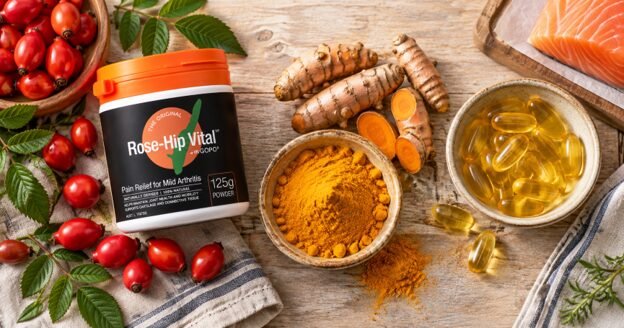
If you’ve spent any time looking into joint supplements, you’ve probably landed on the same three names over and over: rosehip, turmeric, and fish oil. All three get credited with fighting inflammation and oxidative stress, and all three have their loyal fans. What’s harder to find is a straight comparison of how they actually work and what the evidence really shows, rather than a sales pitch for one of them. So here’s an attempt at that, starting with why oxidative stress and inflammation matter for your joints in the first place.
Where Joint Pain Really Comes From
Cartilage breaks down over time partly because of mechanical wear, but oxidative stress speeds that process up considerably. Free radicals damage joint tissue at a cellular level, and the body responds with inflammation, which is useful in small doses and genuinely harmful when it becomes chronic. That’s the loop behind a lot of everyday joint pain: oxidative damage triggers inflammation, inflammation causes more damage, and the cycle keeps feeding itself. Antioxidant and anti-inflammatory nutrition is popular precisely because it targets that loop rather than just masking the pain, which is also why so many people end up comparing rosehip, turmeric, and fish oil side by side.
Rosehip and GOPO: A Different Kind of Anti-Inflammatory
Rosehip, the fruit of the wild rose plant, contains a compound called GOPO, a galactolipid that’s been the subject of a fair number of clinical trials over the past two decades, including double-blind placebo-controlled studies. GOPO appears to work by reducing the activity of certain inflammatory cells rather than blocking a single pathway the way some drugs do, which may be part of why it tends to be well tolerated. Rosehip also brings a naturally high dose of vitamin C to the table, and that matters more than people realize, since vitamin C is essential for collagen production, the very protein your cartilage and connective tissue are built from. So you’re getting an anti-inflammatory compound and a raw material for tissue repair in the same plant. Rose-Hip Vital, made from Rosa Canina berries grown in Denmark and processed to protect the heat-sensitive GOPO content, is one supplement built specifically around this ingredient, and it comes in both powder and capsule form for people who don’t love the taste of the powder on its own.
Turmeric and Curcumin: A Popular Choice With an Absorption Problem
Turmeric’s active compound, curcumin, has one of the longest research histories of any joint supplement, and its anti-inflammatory mechanism is fairly well understood: it interferes with several of the same inflammatory signaling pathways that pharmaceutical anti-inflammatories target. The catch is that curcumin is poorly absorbed on its own. Your gut clears it out before much of it reaches your bloodstream, which is why most reputable turmeric supplements pair it with black pepper extract or a fat-based delivery system to boost uptake. When absorption is handled well, the evidence for curcumin easing joint discomfort is genuinely solid. When it isn’t, you’re mostly paying for an expensive spice.
Fish Oil and Omega-3s: Targeting Inflammation From a Different Angle
Fish oil works through a completely different route. Its omega-3 fatty acids, EPA and DHA, get incorporated directly into cell membranes, where they shift the body’s production of inflammatory compounds toward less inflammatory versions. It’s a slower, more structural kind of change compared to turmeric’s more direct pathway blocking, but the research behind omega-3s and joint inflammation is broad and reasonably consistent, and the same fatty acids carry cardiovascular and cognitive benefits that neither rosehip nor turmeric can claim. The tradeoff is dose. You typically need a fairly high daily amount of EPA and DHA to see a joint-specific effect, and that usually means several capsules a day, sometimes with the fishy aftertaste or burps that make people quit before they’ve given it a fair trial.
Evidence, Taste, and Whether You Can Combine Them
None of these three has a knockout evidence base that puts the other two to shame. Curcumin’s research is deep but hampered by absorption issues. Omega-3s have broad, consistent support but need a meaningful dose. GOPO’s trials are smaller in number but notably well controlled, and it has the added appeal of a food-based vitamin C boost. In practice, people often choose based on convenience rather than ideology: rosehip powder mixes into a drink and tastes reasonably palatable, turmeric supplements are typically capsules with no flavor issue at all, and fish oil is the one most likely to cause taste complaints. There’s no real reason you can’t combine two of these, and plenty of people take fish oil alongside either rosehip or turmeric, since they work through different mechanisms rather than competing for the same one. Just check with a doctor first if you’re on blood thinners, since both fish oil and curcumin can have mild blood-thinning effects of their own.
The Bottom Line
There isn’t a single winner here, and anyone claiming otherwise is probably selling something. Rosehip offers a well-tolerated option with a built-in vitamin C boost and a solid trial record, turmeric brings a longer research history if you get the absorption right, and fish oil offers the broadest health benefits beyond joints if you can tolerate the dose. The honest answer is that consistency matters more than which one you pick. Whichever route appeals to you, whether that’s a daily rose hip supplement, a curcumin blend, or a fish oil capsule, it works best as one part of a broader pattern that includes movement, decent sleep, and a diet that isn’t constantly feeding inflammation in the first place. Give whatever you choose a few months before deciding if it’s doing anything, because joint tissue simply doesn’t change on a faster timeline than that.