


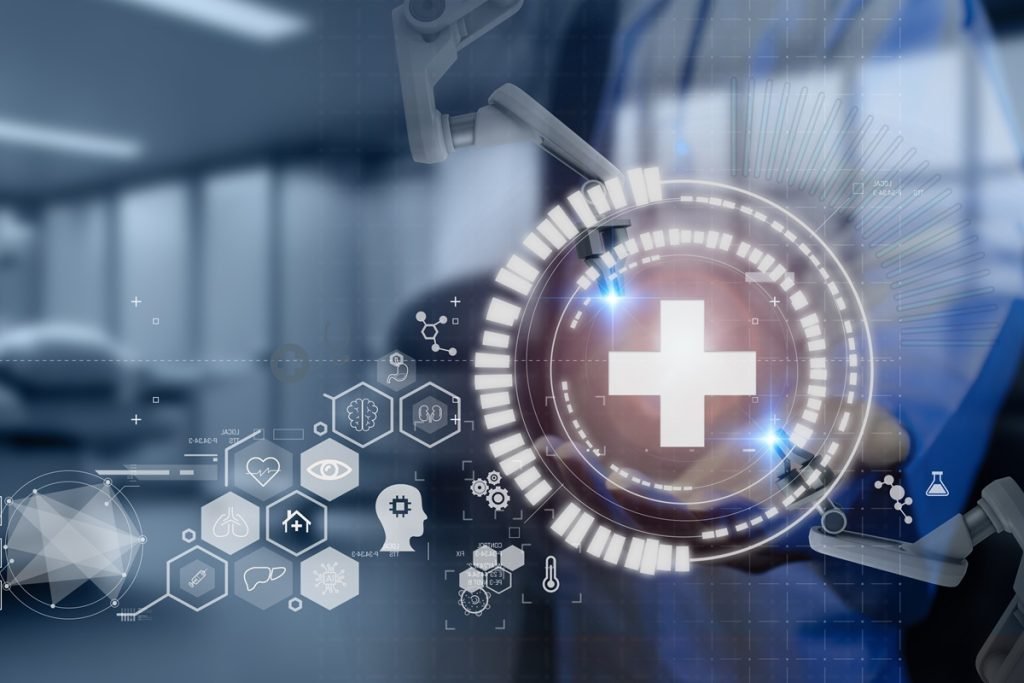
Healthcare is on the cusp of a paradigm shift. No longer relegated to the realm of distant promise, Artificial Intelligence (AI) is already reshaping how clinicians arrive at—and act upon—a diagnosis. From interpreting imaging scans in seconds to uncovering subtle patterns across genomics, pathology, and longitudinal patient histories, AI is accelerating both the speed and accuracy of clinical decision making.
The Diagnostic Co‑Pilot
Traditionally, diagnostic workflows have been sequential: images are captured, reports are drafted, and specialists review findings—often under time pressure. AI disrupts this model by acting in parallel. Advanced computer vision algorithms can triage X-rays, MRIs, and CT scans the moment they’re available, highlighting areas of concern and prioritising cases that require urgent attention. This “first pass” not only alleviates backlogs but also gives radiologists and other specialists a head start, allowing them to focus their expertise where it’s needed most.
Agentic AI takes this collaboration a step further. Rather than simply flagging anomalies, an agentic system can autonomously initiate follow up actions—such as ordering additional tests, cross referencing patient history, or even suggesting differential diagnoses—while keeping the clinician firmly in the driver’s seat. By delegating routine, data heavy tasks to an intelligent assistant, clinicians can devote more time to complex judgment calls and patient interaction.
Pattern Recognition Across Molecular and Clinical Data
Beyond imaging, AI excels at sifting through high dimensional data: genomics, proteomics, and other “omics” fields generate volumes of information far beyond human capacity to parse unaided. Machine learning models can detect mutational signatures predictive of treatment response, correlate biomarkers with clinical outcomes, and pinpoint novel targets for therapy.
When integrated into a patient’s electronic health record (EHR), these insights become actionable. An agentic AI module might automatically flag a patient with a rare mutation for enrolment in a targeted therapy trial, notify the care team, and schedule the necessary consults—all while logging its diagnosis recommendations and ensuring transparency for eventual clinical review.
From One Size Fits All to Truly Personalised Care
The real promise of AI driven diagnostics is personalisation. No two patients are the same, yet historically, clinical guidelines have been based on population averages. By connecting disparate data—from wearable device metrics to lifestyle factors captured via patient questionnaires—AI enables a granular understanding of each individual’s health trajectory.
At Infosys, we build solutions that embed these insights seamlessly into everyday workflows. A cardiologist evaluating chest pain can see not just the stress test results, but also a risk score model tailored to that patient’s genetic profile, prior imaging findings, and even social determinants of health. The result? Interventions that are tailored not only to a disease phenotype, but to the person living with that disease.
Embedding AI into Clinical Workflows
Sophistication of algorithms alone is insufficient if solutions disrupt the clinician’s natural workflow. Our human centred design approach ensures AI modules are intuitive, adaptive, and clinically actionable:
- Seamless EHR Integration
AI insights appear natively alongside lab results and imaging, reducing context switching. - Explainable Recommendations
Rather than opaque “black box” outputs, our systems provide clear rationale—highlighted image regions, contributing variables in a predictive model, or links to supporting literature. - Adaptive Learning
Agentic AI continuously refines its own performance by learning from clinician feedback and real-world outcomes, ensuring recommendations stay current and relevant.
Agentic AI: Autonomy with Oversight
Agentic AI agents operate under well-defined guardrails: they can propose, initiate, and even execute certain tasks autonomously, but always with built in oversight. For example:
- Order Coordination
Upon detecting an urgent finding, the agent can draft and route imaging orders to the appropriate modality. - Patient Communication
Automated notifications—personalised in tone—can be sent to patients with next step instructions, appointment reminders, or educational resources. - Clinical Trial Matching
The agent continuously scans clinical trial registries and alerts eligible patients and providers when novel therapies become available.
Crucially, every action is logged and traceable, preserving clinician accountability and maintaining rigorous compliance with regulatory standards.
Looking Ahead: Scaling the Personalised AI Diagnosis
Health systems that harness AI most effectively will be those that operationalise it at scale—transforming raw insight into day-to-day practice. This requires:
- Robust Data Pipelines
Ensuring interoperability across imaging platforms, lab systems, and EHR vendors. - Change Management
Training clinical staff, revising care pathways, and continuously measuring impact. - Ethical Governance
Addressing bias, safeguarding patient privacy, and maintaining transparency in AI driven decisions.
The future of diagnostics lies not in replacing clinicians, but in empowering them with an ever‑smarter partner: AI that thinks, acts, and learns alongside the human mind. By embedding agentic AI into intuitive workflows, connecting data across the patient journey, and maintaining clinician oversight, healthcare organisations can deliver earlier, more accurate, and truly personalised care at scale. In this partnership, the clinician remains the ultimate decision‑maker—supported, not supplanted, by the diagnostic co‑pilot of tomorrow.
By Venky Ananth, EVP and Global Head of Healthcare, Infosys