


Clinical trials are fundamentally changing the way patient experience data is captured. In a time when regulators are putting much greater emphasis on patient-focused drug development, high-quality patient-reported data is paramount. Electronic clinical outcome assessment (eCOA) platforms and digital health technologies are driving robust, traceable capture of patient data that was difficult or impossible to obtain in the past.
The key to unlocking this potential is interoperability. When medical devices seamlessly connect with digital platforms, manual data entry, a decades-old problem in clinical research, disappears. This reduces patient burden and improves data quality, thanks to real-time monitoring and insights made possible by AI. Such integration is especially transformational in areas like obesity research, where the stakes are extraordinarily high.
The obesity market opportunity
The obesity therapeutics market is growing explosively. Morgan Stanley Research estimates the global market could reach a value of $150 billion by 2035, an increase from a previous forecast (May 2024) of $105 billion. In 2024, this market had about $15 billion in sales. Obesity is joining the ranks of oncology, antidiabetics and immunology as a mega-therapeutic area.
A total of 173 obesity drugs were under development or on the market as of June 2025, which is 53 more than just one year ago. These therapies leverage a variety of mechanisms different from the leading GLP-1s, clinical progress that has made the research landscape more complex. With some drugs developed for weight loss and others designed to maintain loss, the pressure to conduct streamlined, patient-centric trials has grown dramatically.
Why integration matters now
Several converging forces make this a critical moment for clinical trial technology:
- Market pressure: The obesity therapeutics boom demands trials capable of handling long-term patient engagement. Minimized patient burden is important in obesity studies that frequently run for years and measure multiple endpoints.
- Technology maturation: The connected health devices and cloud platforms have transformed from simple data capture tools to sophisticated systems with the potential for real-time synchronization and workflow automation.
- Changed patient expectations: Post-pandemic, patients expect to have digital-first healthcare experiences, such as telehealth, remote monitoring and intuitive apps. Regulations have similarly developed to accommodate these innovations.
- Regulatory evolution: The FDA’s focus on patient-centric drug development is pushing broader implementation of patient-reported outcomes across a wide variety of technology platforms.
The inherent complexity of obesity trials magnifies the need for integration. Patients with obesity often present with multiple comorbidities, as shown in Figure 1. For example, 59% have cardiovascular disease or hypertension, 56% have dyslipidemia, 33% have degenerative joint disease and 32% have type 2 diabetes. These diverse conditions demand that trials measure everything from glucose levels and body composition to physical activity and quality of life. Capturing this range of data across fragmented systems greatly increases patient burden and creates multiple points where errors can occur.

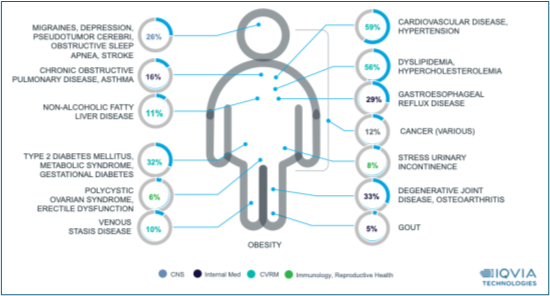
Figure 1: Prevalence of common comorbidities based on U.S. open claims data
The innovation impact
The range of study data to be considered requires patients in conventional trials to manually report device readings, file separate questionnaires and transcribe data, thereby introducing significant burden and several potential failure points. Integrated eCOA platforms fundamentally rewrite this model through the passive capture of device data, contextual questionnaires and unified datasets created without human intervention.
Consider blood glucose monitoring in obesity research. Traditionally, when a patient experiences hypoglycemia, they must read their glucose meter, record the reading and complete a symptom questionnaire, all while potentially disoriented. Memory can be inherently unreliable and critical information can be lost or recorded incorrectly.
But an integrated system automatically logs the incident through the glucose meter when blood sugar levels fall below threshold and immediately alerts the patient to take a short symptom questionnaire. The glucose reading links automatically to questionnaire responses to create a complete record of both the objective measure and the subjective experience, including a time stamp. This captures critical data that might otherwise be lost during these disorienting episodes.
The technical infrastructure will comprise API integrations for transparent data flow, protocols for real-time syncing, a cloud-based data lake to create a single source of truth and HIPAA-compliant security frameworks that protect patient data while ensuring authorized access.
Beyond data collection
Integrated platforms also allow for completely new ways of designing trials and monitoring patients. Machine learning algorithms can predict patient compliance, pinpoint dropout risk and allow adaptive trial designs with procedures that may be altered based on real-time findings.
AI-driven engagement systems triggered by device data enable timely, personalized support. For example, if activity sensors detect decreased physical activity — an early indicator of participant disengagement — the system can automatically deliver motivational messages or send alerts to study coordinators. This proactive approach to compliance management greatly enhances long-term retention.
Integration also allows advanced monitoring for safety. When glucose levels, blood pressure, weight and symptoms reported by the patient stream into one system with synchronized timestamps, researchers can identify correlations that might be hidden in data silos. An adverse event considered minor in isolation may reveal itself as part of a concerning pattern when viewed across multiple data streams.
Benefits across stakeholders
With integrated platforms, every stakeholder benefits. Automation and passive data capture substantially reduce the burden trials pose for patients and change participation from an imposition to empowerment, something particularly meaningful for obesity patients, who may have experienced multiple treatment failures.
Trial sites benefit from richer data insights and dashboards that report in real time on patient compliance, safety concerns and data quality issues. Automated mapping of device readings to diary entries eliminates the need for reconciliation and frees staff for patient care.
Sponsors benefit from accelerated timelines made possible by real-time data integration. When study teams can collect and combine multiple streams of data with virtually no delay, they find and resolve issues in the moment versus months later, when they should be pursuing database lock. In competitive therapeutic areas like obesity, completing studies faster offers concrete operational advantages.
The road ahead
AI-powered integrated platforms represent a fundamental shift in clinical trials from merely collecting data to realizing complete patient experiences in context. Those organizations that embrace this shift will enjoy considerable advantages in driving novel treatments to market.
Beyond competitive advantage, thoughtful technology design is how sponsors empower patients, improving their experience. For patients involved in ground-breaking research, frictionless data capture means they can play their part in moving science forward without sacrificing quality of life. Holistic patient experience platforms are not just driving efficiency but fundamentally changing what is possible in medical research, one automated data point at a time.
By Melissa Mooney, Director, eCOA Sales Engineering at IQVIA