


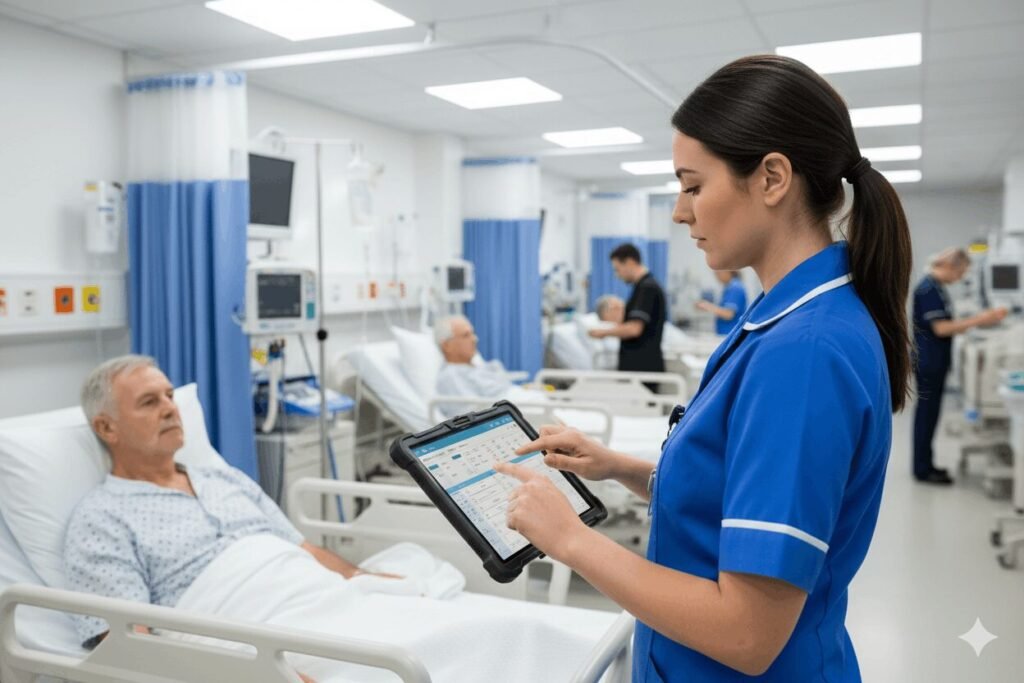
Drawing on insights from a webinar discussing strategies for building confidence, strengthening leadership and supporting workforce resilience through innovative learning models, this article explores how clinical eLearning can empower nurses to make confident decisions and adapt to the demands of modern healthcare.
The Growing Pressure on Nursing Professionals
Global workforce shortages, increasing patient complexity and rapid technological advancements have created an environment where maintaining clinical excellence is more challenging than ever. Central to this evolving landscape are nurses, who continue to be the cornerstone of care delivery, yet often, are disproportionately affected by the pressures facing healthcare systems today. They are expected to deliver safe, high-quality care while adapting to evolving protocols and innovations. This reality underscores an urgent need for accessible, evidence-based learning models that support continuous professional development and empower nurses to thrive in dynamic clinical settings.
Traditional education pathways, while foundational, are no longer sufficient on their own. The pace of change in healthcare demands learning solutions that are flexible, scalable and aligned with local guidelines and clinical standards, ensuring nurses gain the competencies required for safe, effective practice. Nurses require more than theoretical knowledge; they need hands-on skills and real-world experience to help build confidence at the bedside. Digital learning for nurses has emerged as a powerful tool to bridge this gap, offering opportunities for growth that are adaptable to diverse roles, career stages and global health systems.
Why Digital Learning Matters in Modern Nursing
Static curricula are struggling to keep pace with evolving clinical guidelines, new technologies and the growing complexity of patient care. Nurses need education that is responsive to real-world challenges and can be accessed regardless of location or shift patterns. Digital learning platforms that deliver evidence-based content can meet these needs by combining flexibility and scalability with trusted clinical guidance. It enables nurses to learn at their own pace, revisit critical concepts and apply knowledge in context while maintaining alignment with recognised competency standards. For example, a nurse returning to practice after parental leave or moving from a community setting to an acute ward can use digital learning to refresh essential clinical skills,
In addition to offering flexibility and scalability, eLearning can strengthen clinical judgement and help foster leadership skills. For example, structured programmes designed for preceptors, experienced nurses who guide and support new staff during their transition into practice, have been shown to help nurses transition into mentorship roles with confidence. These initiatives help foster compassionate leadership and strengthen workforce resilience, helping to ensure nurses feel supported and empowered in their roles. By integrating interactive modules, case-based scenarios and reflective exercises, eLearning transforms passive knowledge acquisition into active skill development, ensuring that learning outcomes critically translate into improved patient care.
Adapting Education to the Needs of Today’s Nurses
Meeting the evolving needs of today’s nurses means going beyond theory to deliver practical, immersive experiences. Interactive learning formats such as simulation, gamification and video-based modules engage learners and reinforce decision-making under pressure. These approaches replicate real-world scenarios, allowing nurses to practice critical thinking and clinical reasoning in a safe environment before applying them in their care settings.
Flexibility and inclusivity are equally important. Digital platforms can accommodate cultural diversity and neurodiverse learning styles, ensuring relevance across global health systems.
Nurses moving between countries or care settings can access tailored content that bridges practice gaps, reducing anxiety and promoting confidence in unfamiliar environments. This adaptability is vital for a profession that spans continents and cultures. This is particularly important for healthcare systems such as the NHS that have a diverse workforce, where in 2025 alone, almost 40% of newly joined nurses were internationally educated.
Engaging the next generation of nurses requires fresh thinking and innovative solutions. Microlearning and short-form content resonate strongly with younger healthcare professionals, particularly those accustomed to digital-first experiences. However, the same approach may not work for everyone and it’s important to provide diverse learning formats that can also support lifelong learning for experienced nurses. The goal is not to replace traditional education but to complement it with tools that make learning continuous, personalised and practical.
Preparing for the Future
As healthcare systems evolve, so too must the strategies for educating and supporting nurses. Future-proofing nursing education involves embracing blended learning models that combine digital flexibility with hands-on practice. Organisations must invest in programmes that prioritise both accessibility and rigour, creating pathways for nurses to advance their skills without sacrificing work-life balance.
Educators play a critical role in linking theory to bedside application. By integrating interactive content and competency-based assessments, they can ensure that learning translates into measurable improvements in clinical performance. Leadership development is another cornerstone of sustainable progress. Nurse leaders must champion innovation, advocate for professional growth and foster cultures that value continuous learning. These efforts will not only strengthen individual confidence but also enhance team cohesion and patient outcomes.
Future-Proofing the Nursing Workforce
The transformation of nursing education is not a distant goal; it is an immediate necessity. Digital learning offers a practical, scalable solution to bridge the gap between knowledge and clinical practice, empowering nurses to deliver exceptional care in challenging environments. By embracing innovation and fostering collaboration, the nursing profession can move confidently into the future, equipped with the tools and skills needed to thrive.
For deeper insights, real-world case studies and actionable strategies, explore the full publication and discover more about how Elsevier is supporting nurses here.