


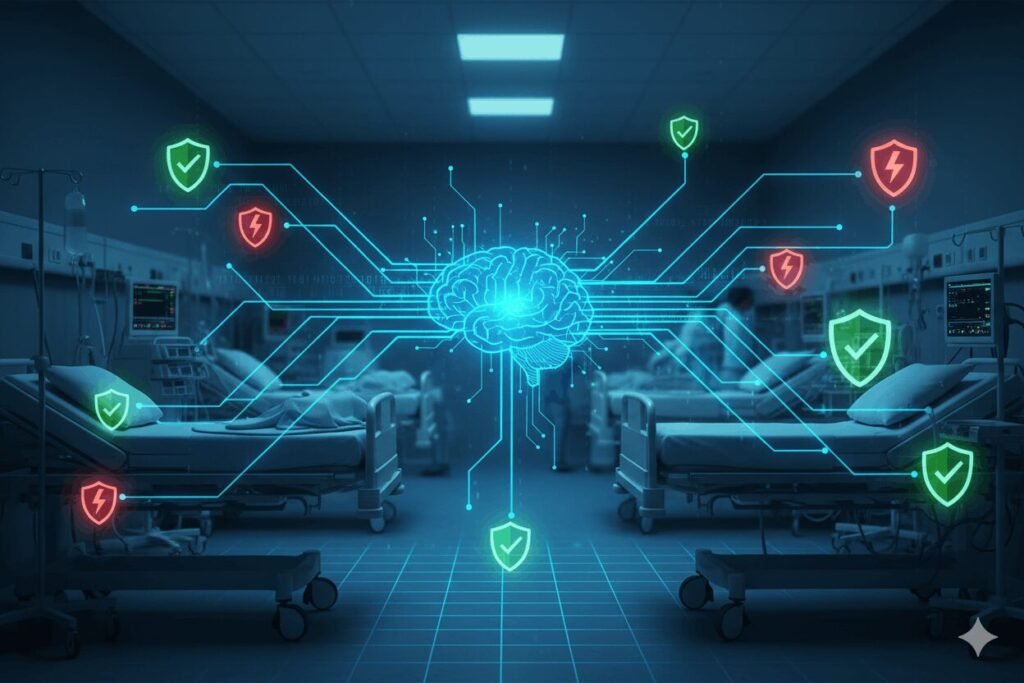
As the Internet of Medical Things (IoMT) continues to develop, patient care improves alongside it. Yet, the emergence of connected technology in the industry has increased the surface area for complex attacks that traditional security simply struggles to defend against, with connected medical devices often serving as the initial point of entry. As these devices are increasingly integrated into clinical workflows, manual oversight is no longer sufficient.
Implementing AI is now the most efficient way to supervise and regulate the technology, representing an essential evolution of cybersecurity strategy. It provides automated, intelligent defenses necessary to protect modern health care ecosystems.
The Expanding IoMT Attack Surface: A New Paradigm for Health Care Security
Previously, effective security mainly entailed protecting centralized data centers. Today, it requires safeguarding a highly distributed network of patient-connected devices that are often mobile and resource-constrained. This is especially complicated given the sheer number of devices used in a single hospital network, ranging from pacemakers to large-scale MRI machines.
Another notable challenge in IoMT is the devices’ life cycle within the ecosystem. A considerable number of medical instruments operate on legacy systems that were not built for the connectivity of the modern landscape. Updating systems is also complicated, as patients often rely on these devices for life support, making them difficult to take offline for patching.
Many organizations are expanding their adoption of location-based technologies like real-time location systems (RTLS), which have been shown to improve asset tracking, patient flow and resource allocation, but also widen the scope of device management needs.
4 Core Applications of AI in Medical Device Security
To effectively address the gap between medical equipment and connectivity, health care organizations have begun incorporating AI into workflows, shifting from a reactive to a more proactive posture.
1. Real-Time Anomaly and Threat Detection
Standard security focuses on threat signatures, which accentuates a more reactive process. AI, however, learns a baseline for each device in the network and flags any deviation from that equilibrium. For example, if a heart rate monitor abruptly starts sending out large volumes of data to a random country, AI immediately takes note. AI enhances cybersecurity by preemptively detecting anomalies and preventing unauthorized data breaches.
2. Predicting Weak Spots
AI can take predictive measures by scanning global data and foreseeing which devices are most likely to be attacked next. If a specific brand or device is being hacked in numerous other hospitals, the AI quickly alerts the IT team. This allows employees to focus on more critical areas rather than trying to fix everything at once.
3. Digital Quarantining Threats
If one device gets a virus, the next logical step is to prevent it from spreading to the rest of the devices. AI can automatically create digital walls around devices via micro-segmentation, preventing lateral movement within the network. This ensures that a compromised guest Wi-Fi device cannot communicate with critical surgical equipment. This level of security is integral to the future of IoT in health care, where safety is built directly into the network.
4. Automated Security Compliance and Auditing
Since the IoT Cybersecurity Improvement Act of 2020, the regulation and application of the technology have become stricter. Remaining in perpetual compliance with HIPAA and FDA regulations is a burden for health care IT.
AI tools can continuously monitor network traffic to automate the collection of audit evidence. These systems provide real-time reporting on which devices are encrypted, which are running outdated firmware, and who has accessed sensitive data. This automation removes human effort and error, ensuring systems remain audit-ready at all times.
Strategic Considerations for Integrating AI into a Security Framework
For health care providers and IT professionals, successfully integrating AI into security workflows goes beyond installing software or purchasing a license. It requires foundational shifts, emphasizing the “how” and “why” more so than the “what”. Successful rollouts require a few important practical considerations.
Firstly, companies need to conduct a comprehensive data audit to establish a baseline for AI to learn from. Ensuring an accurate inventory of network devices enables AI to be effectively integrated into security practices. Before connecting devices to the network, companies should verify IP addresses and serial numbers.
Another important factor in adopting AI into security workflows is ensuring synchronization between engineering and IT teams. These groups often work separately, which can lead to misalignment during crises. If a ventilator gets flagged by a security tool for a potential threat, the response needs to be coordinated so that the appropriate security protocol doesn’t interfere with active patient care.
Lastly, companies should consider a more phased approach to deployment, rather than a complete overhaul. This is especially important if an organization has minimal experience with AI, as incremental changes enable low-stakes experimentation. Starting in a small and controlled area, like an outpatient clinic or the radiology department, allows IT teams to work out any bugs before expanding to critical areas like the ICU.
The Future Outlook: Toward a Resilient, AI-Secured Health Care Ecosystem
As more and more medical devices get connected to the internet, datasets will simply become too vast for manual human oversight. To maximize security and patient safety, health care organizations must adopt AI systems that operate in the background. The more infrastructure is automated, the more health care providers can focus on what really matters — aiding people who need help.
By Zac Amos, ReHack