


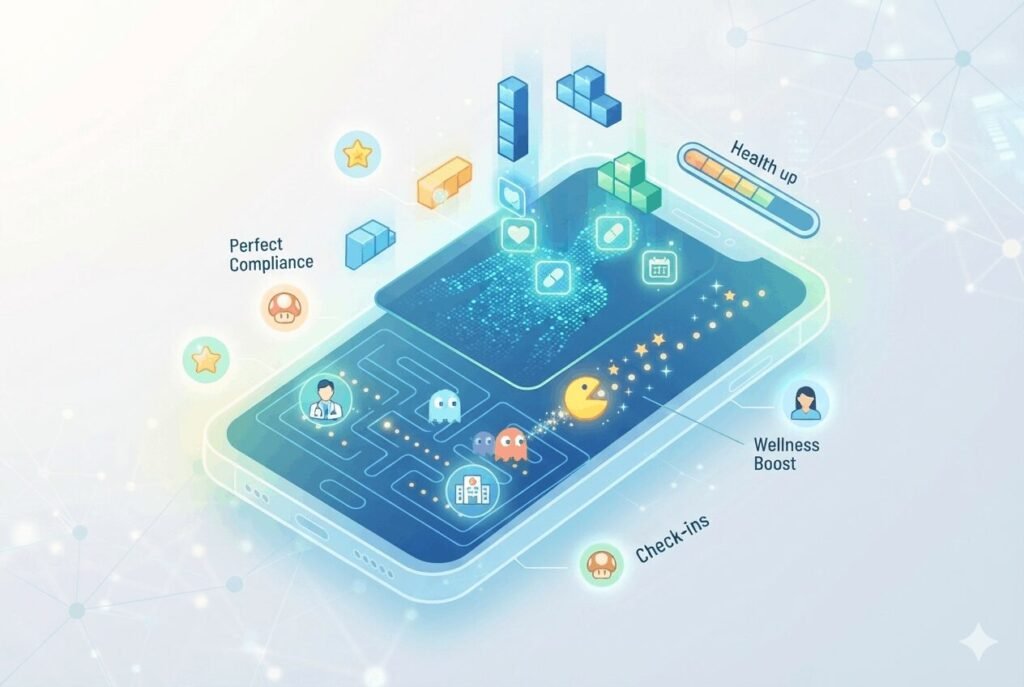
Motivation is a constant battle in long-term care, as it tends to decrease over the course of therapy. Gamification is a method that uses the same psychological rules that keep us hooked on games to make the healthcare experience more interactive. When used judiciously, these strategies can help and motivate patients to stay involved in their care and to aim for improved outcomes.
Why Gamification is a Game-Changer in Healthcare
The reason gamification works is that it taps into the same psychology that keeps people playing games. Features like progress tracking, rewards and achievement milestones can help patients feel more in control of their healthcare goals and stay motivated during treatment. Patients may be more likely to regard duties like taking medication as challenges to be fulfilled rather than chores.
This method is even more critical given the increasing prevalence of chronic disease. They are predicted to cost the global economy $47 trillion by 2030, emphasizing the need for strategies that foster long-term patient engagement and adherence. Patient motivation and adherence to treatment recommendations are frequently crucial to healthcare outcomes. If patients become demotivated or abandon treatment, it may lead to worse health, higher costs and greater burden on providers.
Healthcare firms are beginning to see the potential of gamification to improve engagement. As interest in the industry rises across sectors, the worldwide gamification market is predicted to reach $308.85 billion by 2034.
Gamification Techniques from Classic Games
Many of the most successful games keep players engaged through carefully designed mechanics that encourage progress, persistence and achievement. Healthcare providers can apply these same principles to patient engagement programs, turning routine tasks into experiences that feel more rewarding and motivating.
1. Pac-Man — Clear Goals and Immediate Rewards
Pac-Man has been popular for decades, partly because of its straightforward, easily understood goal. Players know exactly what they have to do. They collect pellets, avoid ghosts and go to the next level. Every successful action is rewarded instantly with points, audio and visual progression, producing a gratifying experience that motivates players to keep playing.
Healthcare professionals can take this similar concept and apply it to patient engagement programs. For example, medication adherence applications can provide patients with clear, daily goals and instant feedback when those goals are met. Progress bars, success badges and streak trackers can help patients see the fruits of their labor in real time. Providing incentives and breaking down broader health goals into smaller, attainable steps can help clinicians increase involvement, while making long-term care less intimidating.
2. Tetris — The Satisfaction of Order and Progress
Tetris is one of the few games that shows the potential of incremental development. Players are always working toward a simple goal, which is putting pieces together, clearing lines and creating order out of chaos. The immediate pleasure of completing each line combined with the constant increase in complexity keeps players interested and encourages them to keep working to improve. Data shows that Tetris is one of the most successful games ever made, with over 70 million physical copies sold and more than 425 million downloads.
A similar idea can be applied to the healthcare business with physical therapy and rehabilitation programs. Apps can break treatment plans into smaller daily workouts for patients to “clear” one step at a time, rather than focusing solely on long-term recovery goals. Visual progress trackers, completed task lists and milestone successes all can help patients see the concrete evidence of their recovery. This method may help make it feel more achievable while motivating patients to remain engaged in their treatment regimens.
3. Minecraft — Customization and Self-Expression
Minecraft’s ongoing appeal is the opportunity it offers players to create something that feels entirely their own. They’re not locked into a linear path — they can create structures, alter their environments and shape their experience to suit their unique desires. This sense of ownership leads to longer-term engagement, as players become invested in what they’ve made.
In healthcare, providers might adopt a similar model by allowing patients to customize their digital health experiences. Patient portals and treatment platforms could provide customizable dashboards, avatars or achievement displays depending on individual development. Cosmetic items and profile upgrades could also be unlocked via health-related goals. These rewards might not have therapeutic benefits in themselves, but they help enhance engagement by making patients feel more connected to their health journey.
4. Mario Kart — Social Connection and Friendly Competition
The fascination with Mario Kart is largely about competing with friends and family, sharing experiences, and seeing whether you can do better than others. The game creates a social environment that keeps individuals playing because they enjoy playing with people they know.
This idea can be applied in healthcare through social wellness and fitness programs. Team-based health goals, friendly leaderboards and step-count competitions can keep patients moving and promote community. Family members, co-workers or support groups can inspire each other through shared progress and health competitions. These elements also encourage accountability, since people are more likely to stay on track when others are on the journey with them.
Bringing Game Design and Gamification Into Healthcare
The most successful games keep players engaged by making progress visible, goals achievable and participation rewarding. By adapting these same principles to healthcare, providers can create experiences that encourage patients to stay motivated and take a more active role in their care.
By Zac Amos, ReHack